
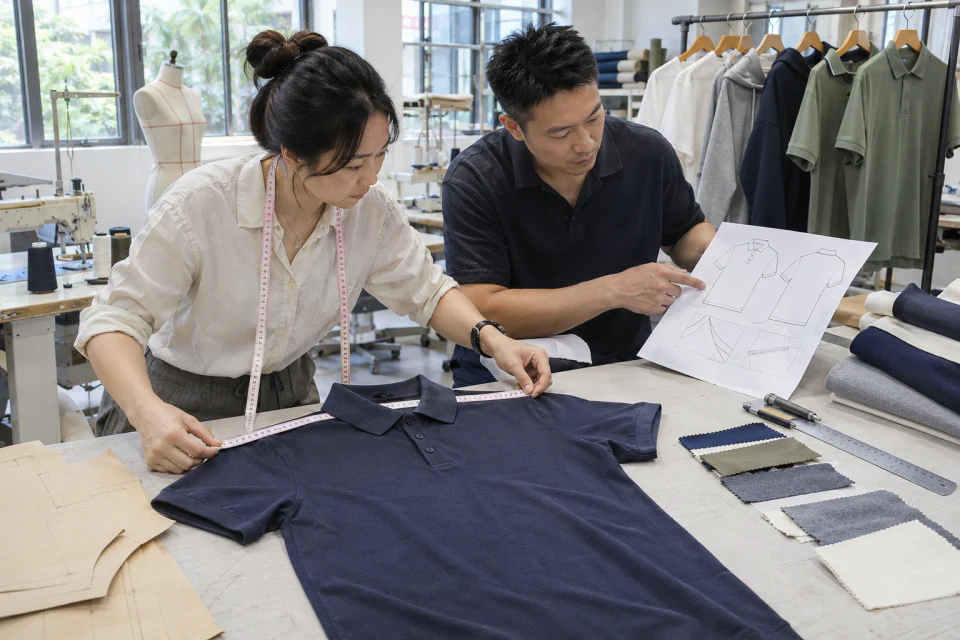
Define what the first sample must answer
Clothing sample development begins by separating the desired look from the information needed to make it. Share the intended wearer, garment category, fit direction and features that must change. Include front and back views, a measurement chart, material choices and artwork files where available. If a reference garment is supplied, identify which details to retain instead of assuming it will be copied without discussion.
With Yumulin in Dongguan, agree whether the brief is ready for OEM sampling or needs ODM development first. Missing specifications, pattern work and any requested development responsibilities should be visible in the scope and quotation.
Choose the right sample stage
A development sample explores construction and material choices. A fit sample checks measurements and the intended silhouette. A size set, where required, checks the graded sizes; a pre-production sample connects the accepted choices before bulk release. The names and exact scope can vary by project, so document what is being approved rather than relying only on the sample label.
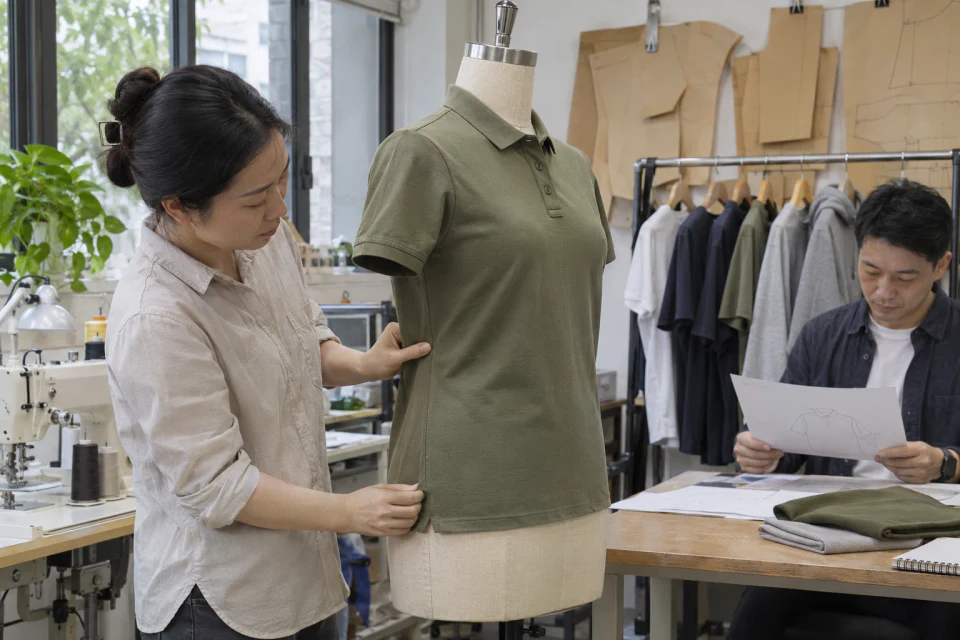
Review fabric and construction together
A material change can affect drape, opacity, stretch recovery and seam behaviour. For a hoodie, consider how body fabric, rib and drawcords work together; for a polo, inspect the collar, placket and shoulder movement. Use the proposed fabric and decoration combination to evaluate the actual result, with care testing agreed separately when relevant.
CottonWorks explains that shrinkage can also affect seams, fit and the relationship between body cloth and trims. Establish the intended care method and the measurement conditions before comparing samples. Do not describe a garment as shrink-proof or performance-tested without the applicable evidence.
Give feedback that can be reproduced
- Identify the sample and specification revision.
- Name the measurement point and method; include a clear photo where useful.
- Separate fit changes from colour, trim or workmanship comments.
- Mark accepted details so they are not changed unintentionally.
- Combine feedback from all reviewers before the next revision.
For example, replace “make it slightly shorter” with a measured body-length change at the agreed point. Check whether that change affects the pocket, decoration position or size grading.
Close the development loop before bulk release
Keep the approved sample, measurement chart, fabric reference, artwork and packing requirement together. Record any accepted deviations and list unresolved items. Agree who may approve substitutions and how they affect cost or timing. Sample approval should authorise a defined production version rather than an open-ended interpretation of the design.
See technical development, sampling and production and our tech pack checklist. provides further technical context.