
Compare cotton-blend jersey for your garment brief: T-shirts, everyday tops and athleisure. Confirm the proposed specification on a physical sample.
Cotton-containing yarn forms interlocking knit loops; other fibres can modify strength, stability or stretch. Single jersey commonly has V-shaped loops on its face and a different reverse texture.
What to compare in the image
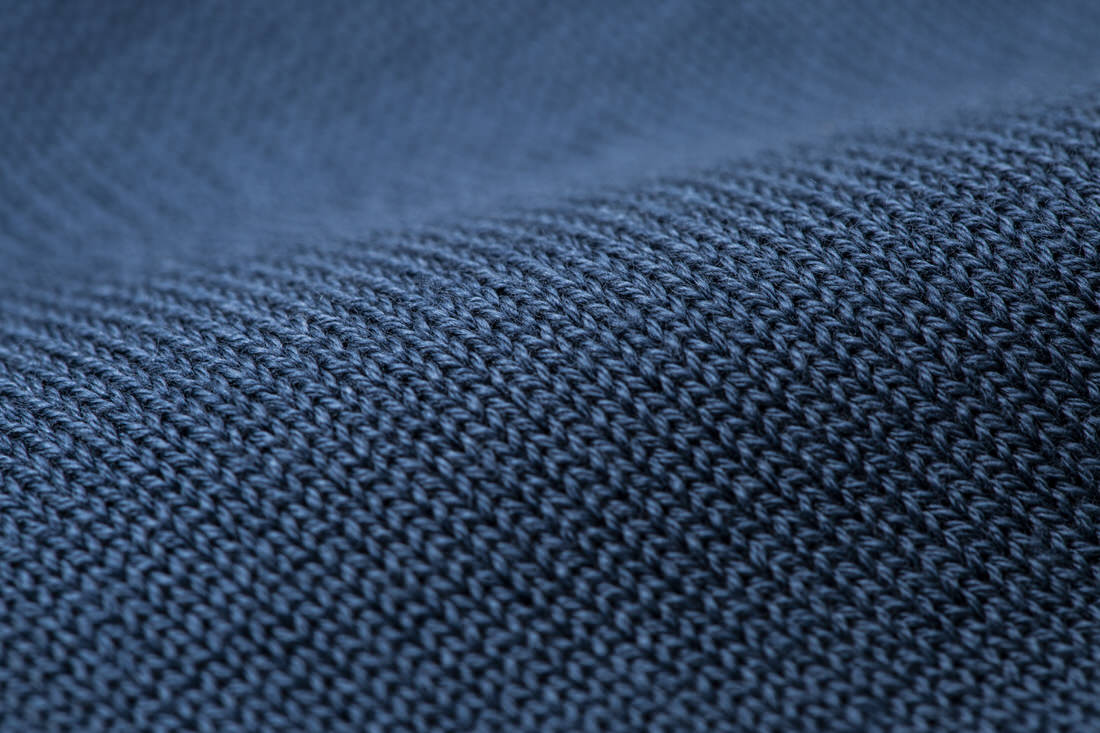
The close-up emphasises cotton knit loops and yarn texture. Loop outlines are more apparent than on the fine nylon example; plain jersey does not rely on the pronounced openings of mesh.
Properties and limitations
The photograph illustrates knit structure, not a fixed blend. Confirm cotton content, yarn specification and weight; compare shrinkage, twisting, pilling and neckline recovery.
External visual samples, not a factory sample.
Choose fabric, decoration and care together
Keep fibre composition, construction, GSM, stretch, surface finish and planned wash process in one specification. Test the chosen decoration on the actual material.
- Printing for Custom Clothing: Confirm fibre content, surface finish, stretch and heat sensitivity. On polyester-rich fabric, evaluate dye migration with the chosen print system. Compare coverage, edges, hand-feel and the printed area after washing.
- Embroidery for Custom Clothing: Review fabric weight and stretch, backing, stitch density and access to the placement. Compare small lettering, outline definition, puckering and the reverse side on an actual garment sample.
- Garment Washing and Finishing Guide: Record the fibre blend, construction, dye and finish. Compare dimensions, shade, seams, surface and strength after the agreed treatment. A denim wash samples does not establish suitability for nylon, polyester or stretch blends.
Clothing fabric selection guide
How to specify cotton-blend jersey
Compare knit structure, yarn, weight, surface feel and dimensional stability. Check the neckline, cuffs and decorated areas on the finished garment. A heavier swatch is not automatically better: choose the construction for the target fit, season and garment use.
What to send for sampling and a quotation
- Garment samples, intended wear and destination market.
- Material composition, weight, colour and the proposed finish.
- Quantity by style and colour, target timing and approval responsibility.
- Artwork dimensions and placement; measurement and care requirements.
Sample approval and repeat orders
Keep the approved material or decorated garment, its revision and the agreed check results together. For a repeat order, confirm the material lot, shade, artwork version and current conditions again. Price, minimums and schedule follow the actual specification; photographs show appearance and do not establish tested performance.
Compare fabric options · Compare decoration options · Prepare a development brief · Agree inspection requirements