Screen printing
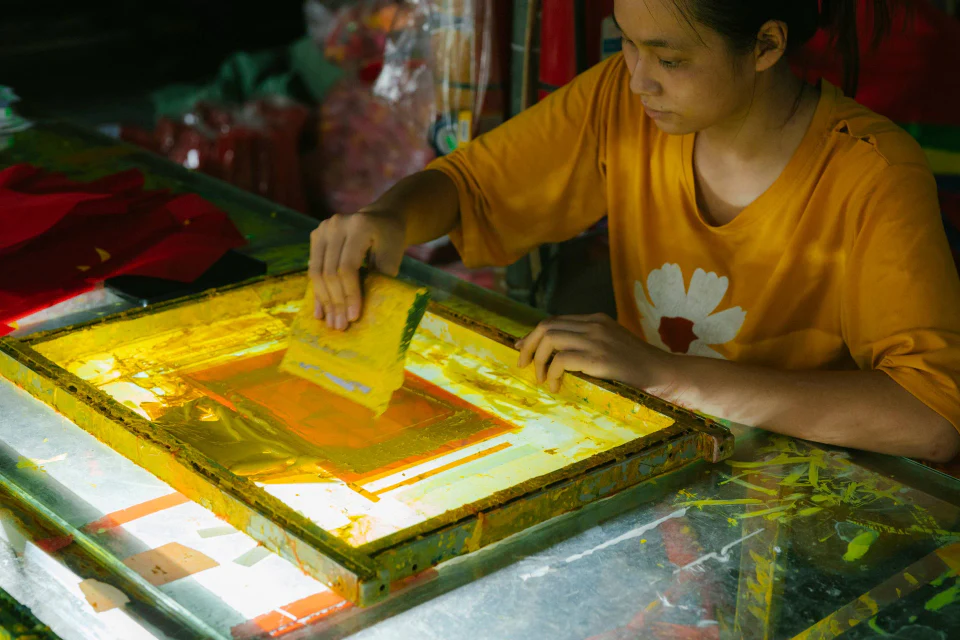
Screen printing transfers ink through a stencil mesh. Separated colour layers form the pattern; compare coverage, registration and hand-feel.
- Applicable
- A starting point for solid logos and lettering on T-shirts, sweatshirts and teamwear. Confirm the ink system against the actual fibre composition, finish and stretch.
Screen printing transfers ink through a stencil mesh. Separated colour layers form the pattern; compare coverage, registration and hand-feel.
Suitable garments and material checks
A starting point for solid logos and lettering on T-shirts, sweatshirts and teamwear. Confirm the ink system against the actual fibre composition, finish and stretch.
Artwork and design limits
Specify final dimensions and colour references. Small gaps, fine text, large solid areas and printing across seams need a sample check.
Compare before choosing
Choose conventional screen printing when a flatter ink effect is intended. Compare puff printing when raised lettering is part of the design.
Questions before sampling
What should I send for a sample?
Send the artwork, finished dimensions, placement, colour references, fabric composition and weight, size range and intended quantity. Include the target market and care requirements.
Can a photograph confirm wash durability or a production price?
No. A photograph shows appearance, not tested durability or a fixed quotation. Agree the sample, test method and acceptance criteria; confirm price and lead time against the actual brief.
Prepare your sample brief
Confirm the fabric, artwork size, colours and placement on a physical sample. Check adhesion or attachment, flexibility and washing results before bulk production.
Continue your material and process brief
More photographic references