
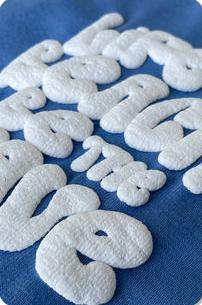
Puff printing
Puff printing uses an ink layer that expands with heat to create relief. Broad shapes usually show the effect more clearly than very fine lines.
- Applicable
- Consider bold lettering and simple motifs on T-shirts and hoodies. The fabric must tolerate the chosen curing process; test stretch and recovery with the finished print.
Puff printing uses an ink layer that expands with heat to create relief. Broad shapes usually show the effect more clearly than very fine lines.
Suitable garments and material checks
Consider bold lettering and simple motifs on T-shirts and hoodies. The fabric must tolerate the chosen curing process; test stretch and recovery with the finished print.
Artwork and design limits
Very fine strokes and narrow spaces can lose definition as the layer expands. Confirm line width, expansion, placement and hand-feel on the actual cloth.
Compare before choosing
Puff builds relief by expansion during heating. Raised screen printing builds a thicker printed layer; compare physical samples rather than judging height from photographs.
Questions before sampling
What should I send for a sample?
Send the artwork, finished dimensions, placement, colour references, fabric composition and weight, size range and intended quantity. Include the target market and care requirements.
Can a photograph confirm wash durability or a production price?
No. A photograph shows appearance, not tested durability or a fixed quotation. Agree the sample, test method and acceptance criteria; confirm price and lead time against the actual brief.
Prepare your sample brief
Confirm the fabric, artwork size, colours and placement on a physical sample. Check adhesion or attachment, flexibility and washing results before bulk production.