
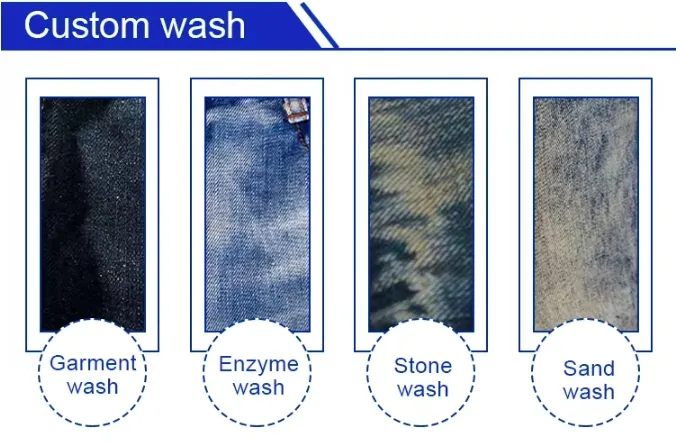
Compare enzyme wash for your garment brief: Compatible cotton-rich knits and denim finishing. Confirm the proposed specification on a physical sample.
Enzymes selected for the fibre modify its surface. Cellulase is commonly used for cotton surface cleaning and denim abrasion; the enzyme must suit the material.
What to compare in the image
The Enzyme wash panel provides a shade and surface samples. Unlike mechanical stone abrasion, enzymes act through biocatalysis; production processes may combine both approaches.
Properties and limitations
Enzyme type, temperature, treatment time and deactivation affect results. Compare surface fuzz, strength, shade and dimensions rather than colour alone.
External visual samples, not a factory sample.
How to specify enzyme wash
Agree the fibre, base colour and intended finished effect before trials. Review shade variation, handle, seam appearance and garment measurements after processing. Keep an identified finished samples and agree acceptable variation; the process name alone does not define an exact recipe or a repeatable colour.
What to send for sampling and a quotation
- Garment samples, intended wear and destination market.
- Material composition, weight, colour and the proposed finish.
- Quantity by style and colour, target timing and approval responsibility.
- Artwork dimensions and placement; measurement and care requirements.
Sample approval and repeat orders
Keep the approved material or decorated garment, its revision and the agreed check results together. For a repeat order, confirm the material lot, shade, artwork version and current conditions again. Price, minimums and schedule follow the actual specification; photographs show appearance and do not establish tested performance.
Compare fabric options · Compare decoration options · Prepare a development brief · Agree inspection requirements