
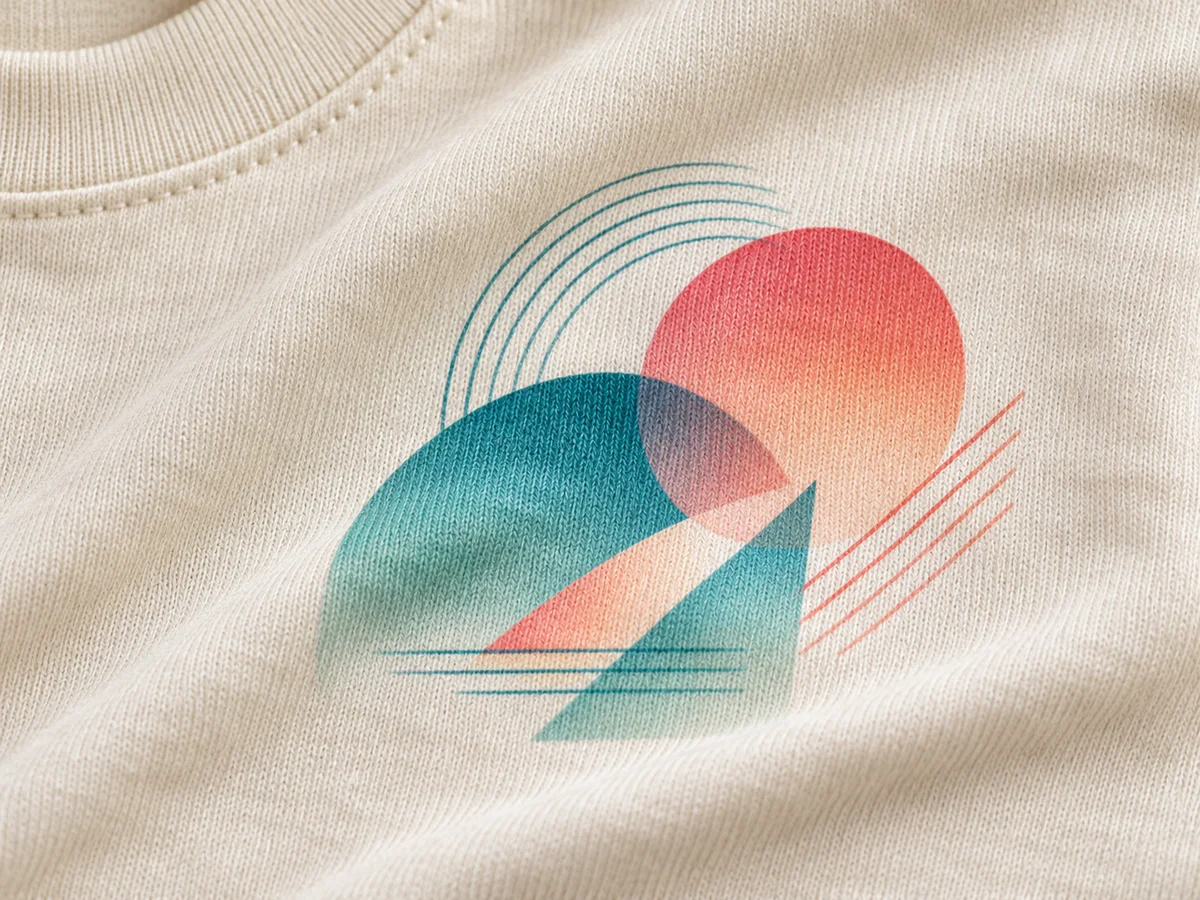
Compare direct-to-garment printing (dtg) for your garment brief: Detailed images and photographic graphics on cotton-rich tees. Confirm the proposed specification on a physical sample.
DTG prints directly onto a garment and is a form of digital printing. The garment is held in position, pretreated where needed, printed and cured.
What to compare in the image
The close-up shows multicolour detail and shading alongside the cloth texture. Compared with solid screen-printed graphics, fine artwork is the focus; white underbases on dark fabric can affect hand-feel.
Properties and limitations
Cotton and some cotton blends are common substrates. Suitability depends on printer, ink and fabric finish; assess pretreatment marks, colour and wash results.
External visual samples, not a factory sample.
How to specify direct-to-garment printing (dtg)
Choose the ink or transfer system for the actual fabric, stretch and finish. Compare graphic size, colour, edge detail, surface feel and adhesion on a physical trial. Review care conditions and any relevant durability checks before the run; one successful application does not prove compatibility with every garment.
What to send for sampling and a quotation
- Garment samples, intended wear and destination market.
- Material composition, weight, colour and the proposed finish.
- Quantity by style and colour, target timing and approval responsibility.
- Artwork dimensions and placement; measurement and care requirements.
Sample approval and repeat orders
Keep the approved material or decorated garment, its revision and the agreed check results together. For a repeat order, confirm the material lot, shade, artwork version and current conditions again. Price, minimums and schedule follow the actual specification; photographs show appearance and do not establish tested performance.
Compare fabric options · Compare decoration options · Prepare a development brief · Agree inspection requirements