

Concept project. The customer, quantities, development story and outcomes are illustrative; images show styling or process references, not a documented customer order.
A range with one clear identity
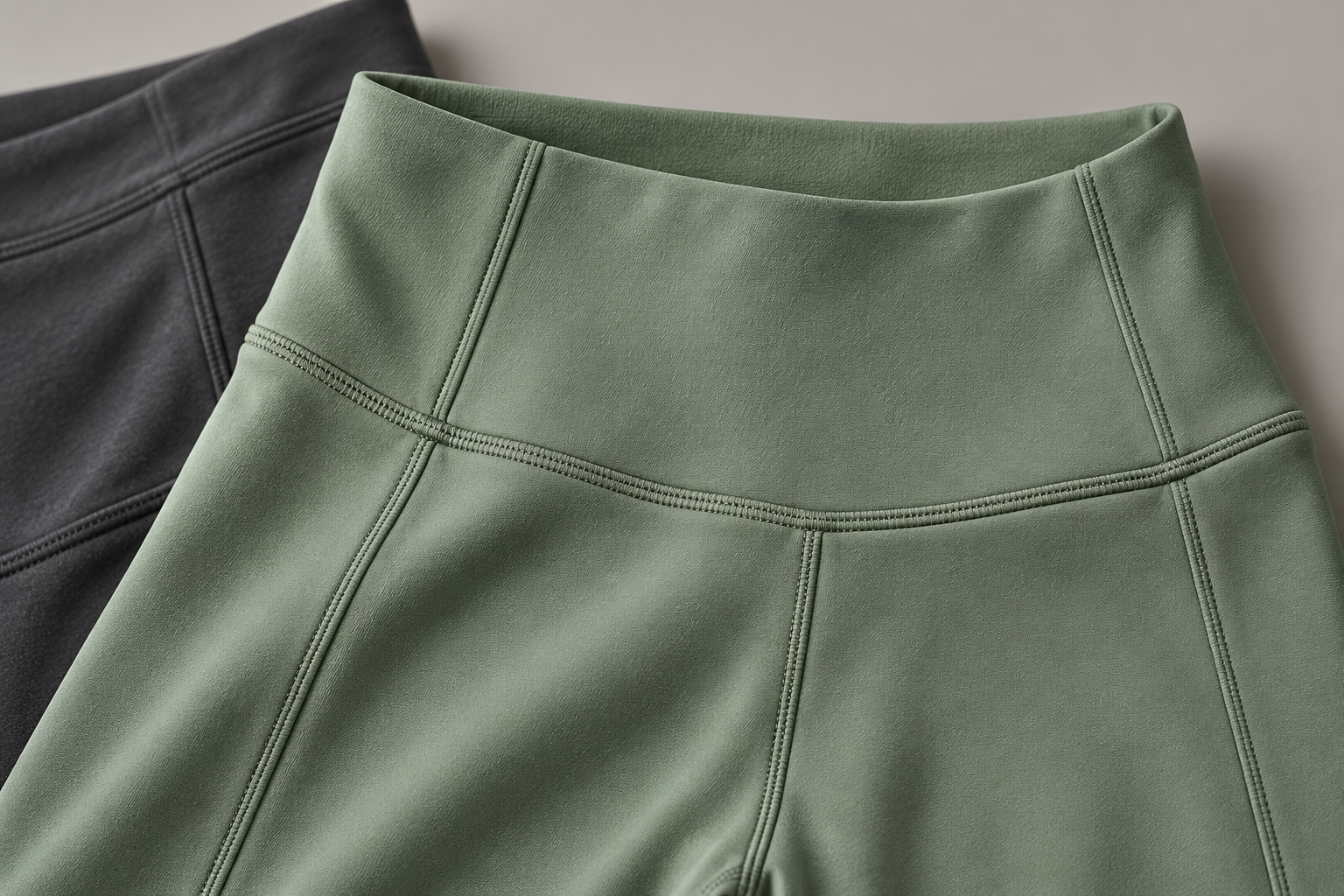
A boutique yoga studio wants a small retail offer that feels consistent with its classes. The proposed 400-set plan starts with a longline bra and high-waisted leggings rather than a broad assortment. Sage is the lead colour, with charcoal as a complementary option, so the photography, labels and merchandising can share a quiet visual language.
The construction decisions
Material selection starts with hand feel, stretch and recovery. The leggings' waistband height and seam path are reviewed during bending and seated movement; the bra is checked separately for strap position and coverage. The detail photograph isolates the waistband and flatlock seams. Opacity, colourfastness and care performance would be assessed on the final fabric, rather than inferred from a picture.
Ready for sampling and repeat orders
The development file brings together matched samples, measurements, colour references and the agreed testing plan. Care labels and individual packaging are approved after composition is confirmed. Later colours can reuse the fit reference, while any material substitution triggers a fresh sample review.
A garment-specific approval checklist
Bra coverage and underband; legging waistband, rise and seam positions; colour matching across the paired fabrics.
Review movement on the intended fit model and assess opacity under the agreed stretch conditions. Record where rubbing or restriction occurs. Material claims and performance tests should be agreed separately from a visual fit approval.
Records needed before production
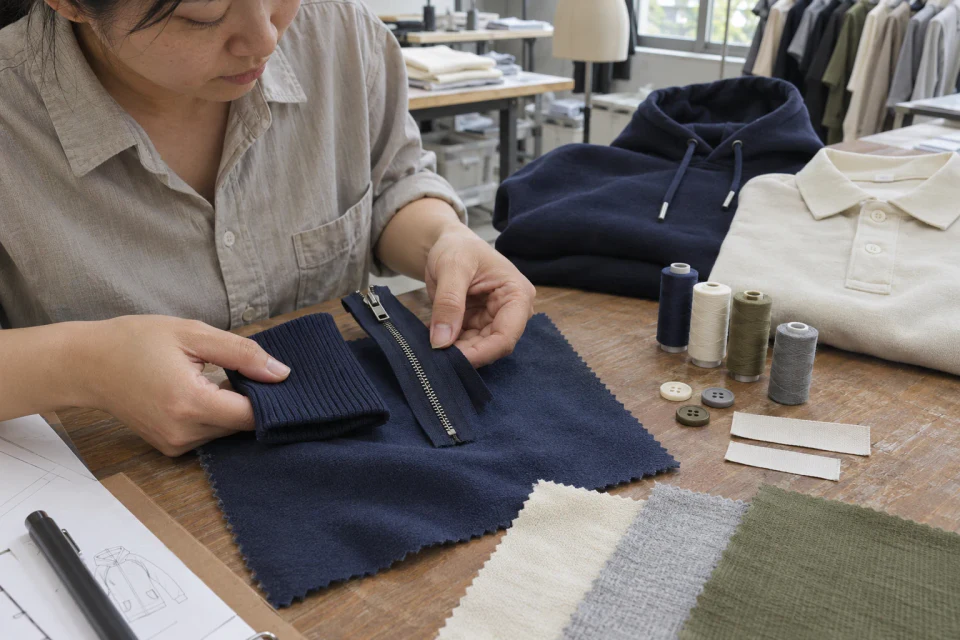
Connect the selected fabric and colour references to the measurement chart, decoration files and packing allocation. Identify the sample version and the decisions it approves. Agree which material or performance checks apply and who reviews any findings. A colour or material change should be assessed before it becomes the new production instruction.
For a repeat order, reconfirm current material availability, shade, player data where relevant and the version of the approved garment. Do not assume a previous quotation or sample automatically covers a new size, colour or delivery requirement.
How to use this development example
This is an illustrative project plan, not evidence of a completed customer order, shipment or measured performance result. Its proposed quantities and handoff records explain the decision process; actual MOQ, fees, schedule and acceptance conditions depend on the agreed project. Use the checklist to prepare the questions that still need a sample or written confirmation.
Continue with clothing sourcing preparation, sampling and bulk approval, garment inspection and your own collection enquiry.