

Concept project. The customer, quantities, development story and outcomes are illustrative; images show styling or process references, not a documented customer order.
A range with one clear identity
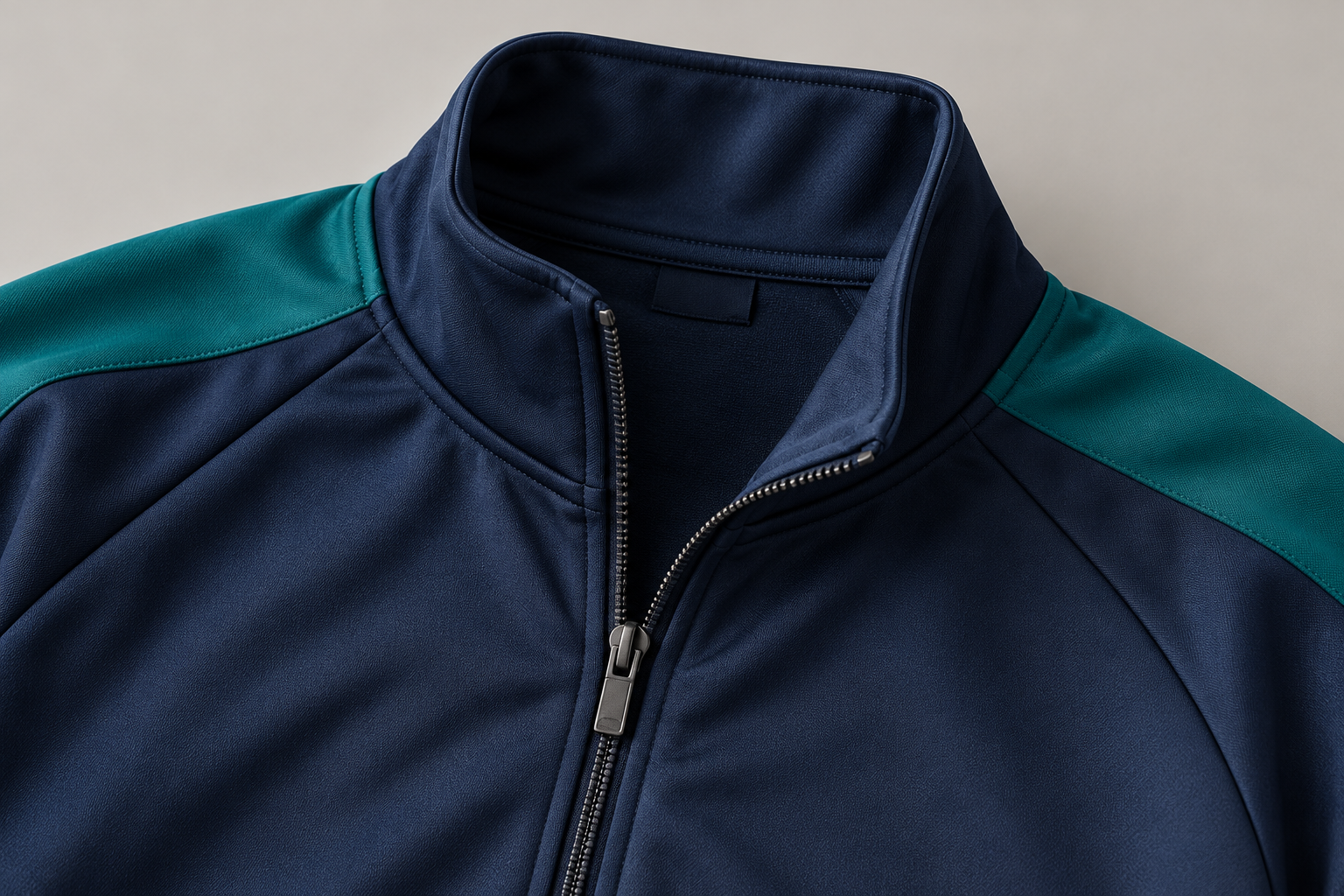
A regional club needs its training and travel clothing to look like one programme, even when different groups order at different times. The proposed 1,500-garment range pairs a white training T-shirt with a navy zip jacket and matching tapered pants. Teal panels provide a common visual detail without covering every surface in decoration.
The construction decisions
The jacket's stand collar, zipper and shoulder panel are treated as functional construction decisions. A fitting sample checks reach, layering room and cuff recovery; pants receive a separate seated and movement review. Decoration is released only after the garment shape and artwork positions are approved. Player names, numbers, sizes and team groups share one revision-controlled roster.
Ready for sampling and repeat orders
The packing plan follows team, size and player identifier, making it easier to distribute the range at the club. A retained sample, fabric reference and artwork file support later registrations. Reorders still require a new quantity and colour confirmation, while keeping the original measurements and decoration positions available.
A garment-specific approval checklist
Shared team colours; jacket and trouser proportions; training-top fit; approved crest, name and number locations.
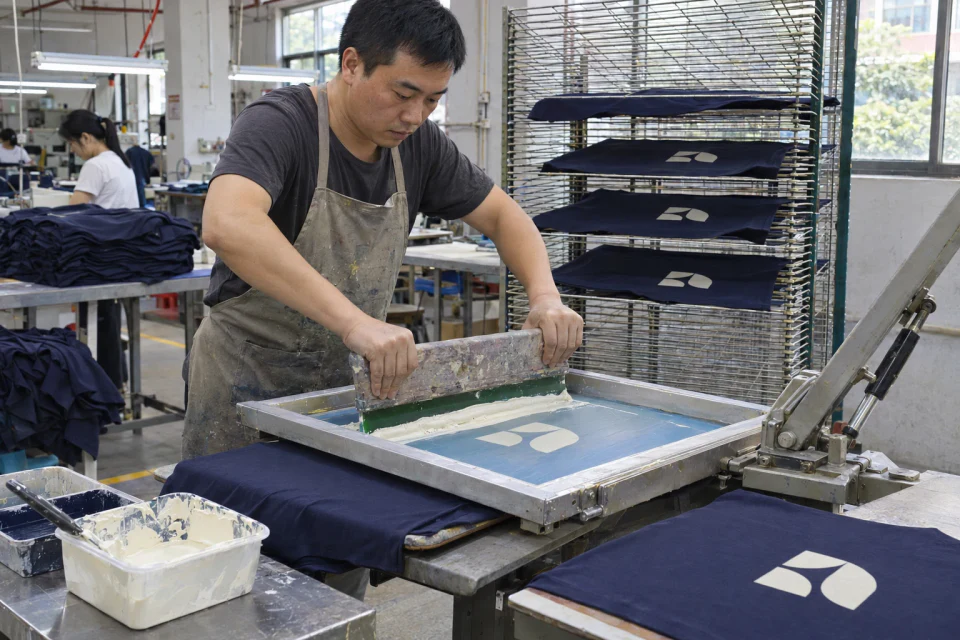
Use one roster linked to garment size and approved identifiers. Confirm spelling, number allocation and artwork positions before decoration. Review packing by team or group and control any late additions as a new version.
Records needed before production
Connect the selected fabric and colour references to the measurement chart, decoration files and packing allocation. Identify the sample version and the decisions it approves. Agree which material or performance checks apply and who reviews any findings. A colour or material change should be assessed before it becomes the new production instruction.
For a repeat order, reconfirm current material availability, shade, player data where relevant and the version of the approved garment. Do not assume a previous quotation or sample automatically covers a new size, colour or delivery requirement.
How to use this development example
This is an illustrative project plan, not evidence of a completed customer order, shipment or measured performance result. Its proposed quantities and handoff records explain the decision process; actual MOQ, fees, schedule and acceptance conditions depend on the agreed project. Use the checklist to prepare the questions that still need a sample or written confirmation.
Continue with clothing sourcing preparation, sampling and bulk approval, garment inspection and your own collection enquiry.