

Concept project. The customer, quantities, development story and outcomes are illustrative; images show styling or process references, not a documented customer order.
A range with one clear identity
The starting point is a small golf label planning its first coordinated range. Buying six unrelated styles would make fabric selection, colour approval and stock planning unnecessarily complex. The proposed 600-garment capsule narrows the brief to three complementary pieces: a navy polo for the course, a sage lightweight quarter-zip for cooler mornings and stone shorts that work with both tops.
The construction decisions
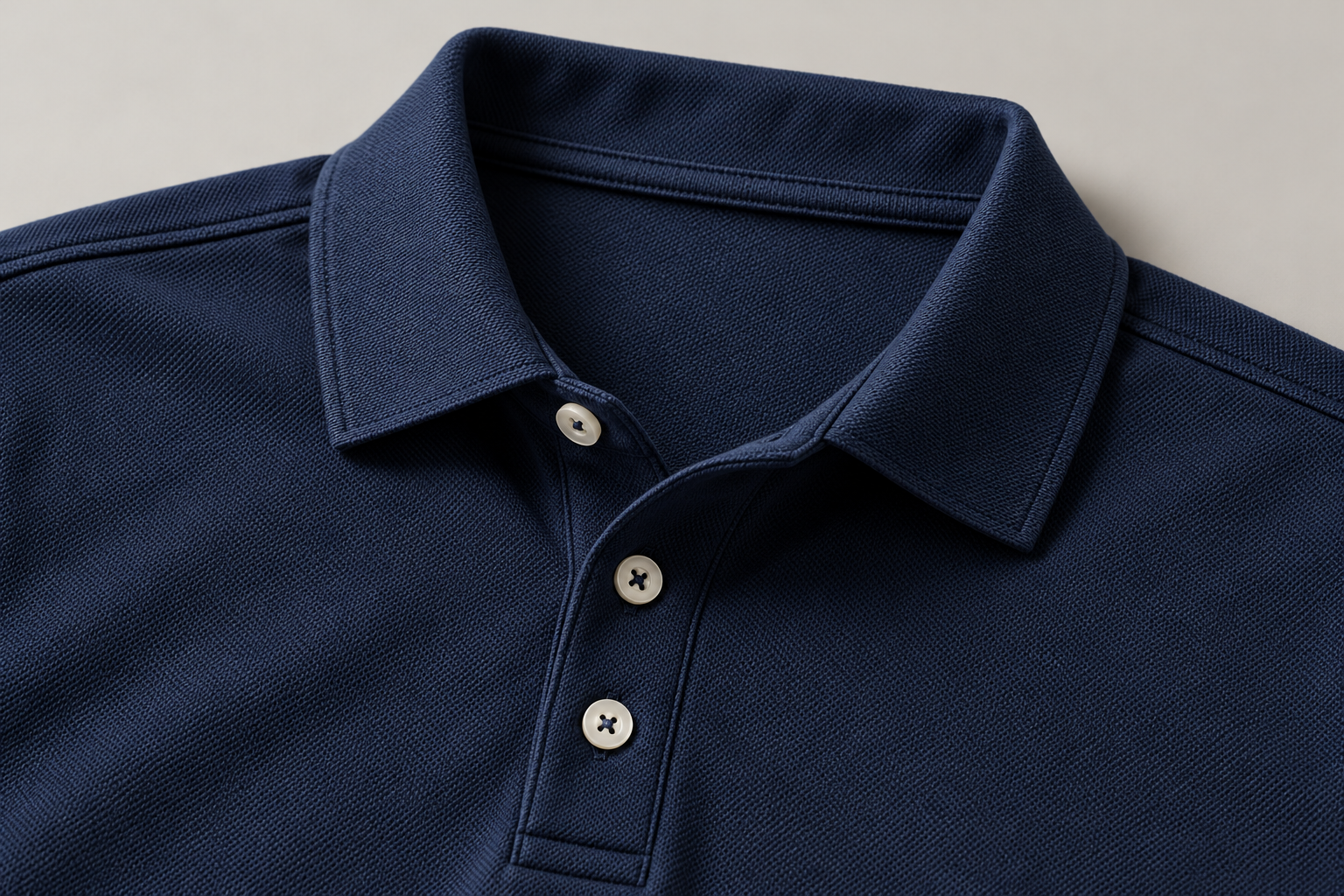
The polo's collar, placket and sleeve balance are reviewed together, because a good flat photograph cannot confirm how a garment moves through a swing. The detail image focuses on the pique texture and placket construction. Sampling would compare collar stability, shoulder movement and hem length; the layer and shorts receive separate fit checks. Actual fibre composition, weight and care requirements belong in the approved technical pack.
Ready for sampling and repeat orders
One trim and colour file connects all three styles. It records label placement, zipper finish, colour references, measurements and pack-out requirements. A retained sample and a dated specification give a later colour addition a clear starting point. The planned deliverable is an approved development package, rather than a claim about sales or a completed shipment.
A garment-specific approval checklist
Polo collar and placket balance; quarter-zip movement; shorts rise, pocket access and waistband construction.
Compare the polo and layer over the agreed base size. Check shoulder movement and the hem relationship between garments before finalising logo positions. Verify collar appearance and garment measurements after the agreed care cycle.

Records needed before production
Connect the selected fabric and colour references to the measurement chart, decoration files and packing allocation. Identify the sample version and the decisions it approves. Agree which material or performance checks apply and who reviews any findings. A colour or material change should be assessed before it becomes the new production instruction.
For a repeat order, reconfirm current material availability, shade, player data where relevant and the version of the approved garment. Do not assume a previous quotation or sample automatically covers a new size, colour or delivery requirement.
How to use this development example
This is an illustrative project plan, not evidence of a completed customer order, shipment or measured performance result. Its proposed quantities and handoff records explain the decision process; actual MOQ, fees, schedule and acceptance conditions depend on the agreed project. Use the checklist to prepare the questions that still need a sample or written confirmation.
Continue with clothing sourcing preparation, sampling and bulk approval, garment inspection and your own collection enquiry.