
Quality starts with an agreed garment
Garment quality control needs a defined reference. Agree the style, fabric, measurement method, tolerances and workmanship expectations before production. A size label such as medium does not define chest width, body length or the intended fit. The same applies to words such as premium: translate the desired result into material choices, construction details and approval criteria.
For a private label clothing project, include the branding system in that reference. Logo placement, label material, attachment and packing can change how the finished garment feels and how consistently it is presented.
Review construction and dimensions separately
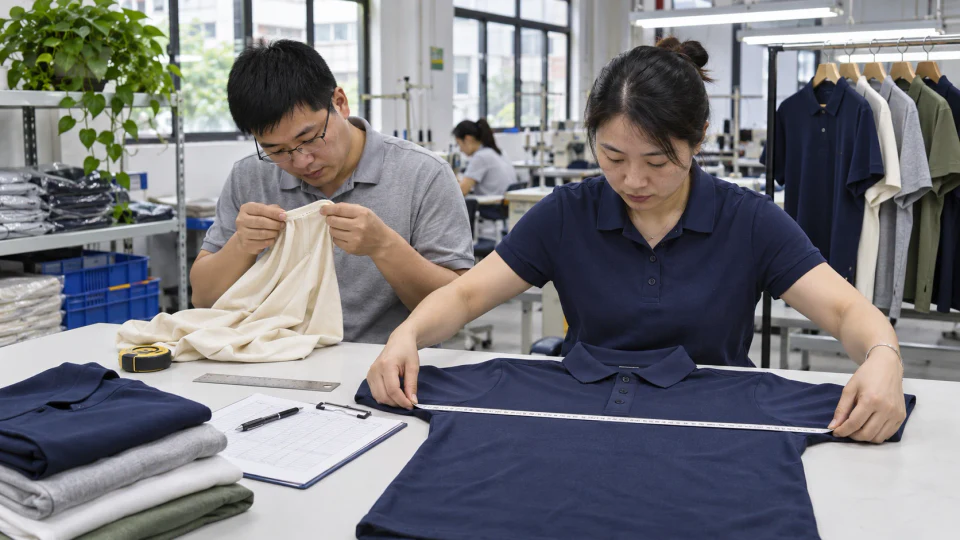
Measurements describe dimensions at agreed points; workmanship checks cover seams, skipped stitches, puckering, openings, symmetry and finishing. Inspect the features relevant to the style rather than applying one identical checklist to every garment. A stretch training top and a structured polo can present different risks.
Visual inspection does not establish wash durability, colourfastness, fibre composition or every performance claim. Identify the checks or tests required for the intended use and market, and agree their method and acceptance basis separately.
Approve logo application on the actual material
Printing and embroidery interact with the garment surface, weight and stretch. Confirm artwork dimensions, location, colours and attachment details on the proposed material. A raised embroidery can feel different against the skin from a flat transfer, while a large graphic can behave differently on a stretch panel from a small chest mark.
Keep the approved artwork version and decorated sample together. If the material or application changes, review whether appearance, comfort and care performance need another approval instead of assuming the earlier result still applies.
Treat labels and packing as part of the garment
- Main label, size label and care information: content, material and attachment.
- Hangtags and barcode allocation: identify who supplies and checks the data.
- Fold method and individual protection: match the receiving requirements.
- Carton marks and style-colour-size allocation: reconcile against the packing list.
Brand artwork and required destination information are different responsibilities. Agree who prepares and checks the relevant wording. A branded sample does not by itself prove that every market requirement has been reviewed.
Use findings to make a release decision
Record the inspected sample or lot, specification version, findings, corrective action and reviewer. Decide how unresolved issues are handled before shipment. A sampling inspection is evidence about the agreed scope; it is not a promise that every possible defect is absent. Keep the inspection outcome connected to the order release conditions.
Continue with garment inspection, private label development, printing and embroidery options and packing instructions.