
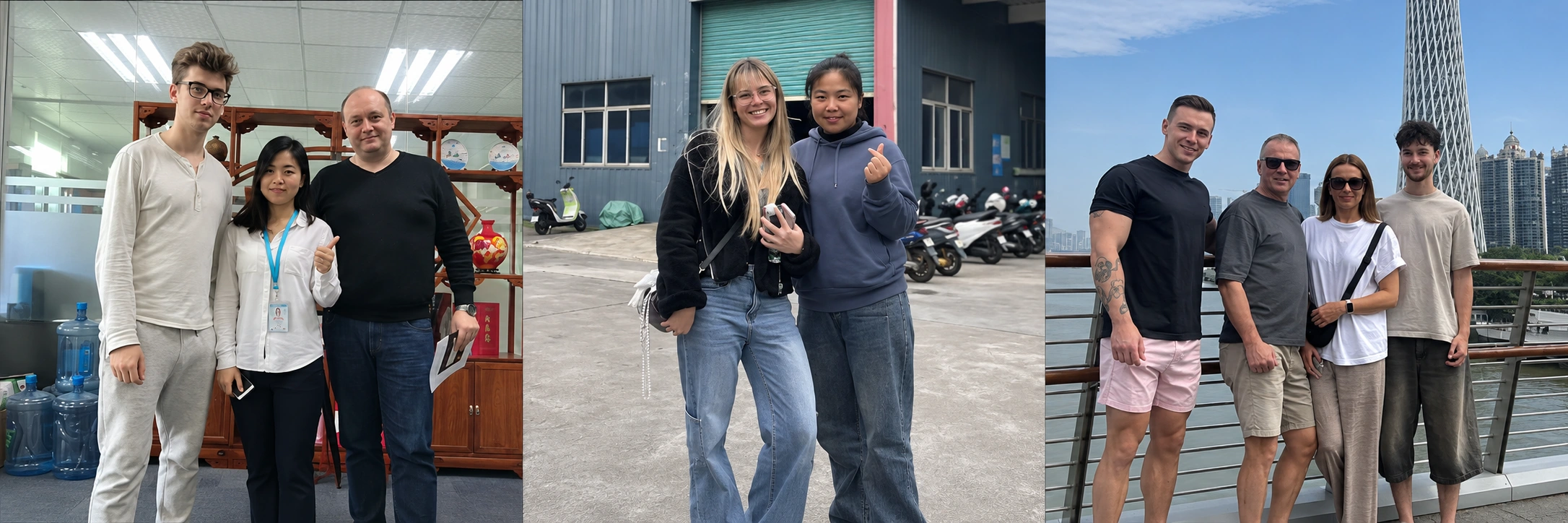
A business connection, followed by a clear brief
The customer exchange photograph records a business connection with Yumulin. The preparation points below are a practical sourcing guide, not a transcript of that meeting or evidence of an agreed purchase order. Contact the team to confirm the available meeting arrangement and the project scope you want to discuss.
Define the assortment before discussing price
For a brand selling several clothing categories, the first question is which garments belong in the collection. A T-shirt, polo and sweatshirt may share a colour story but need different fabric, fit and construction decisions. Bring a shortlist of style references with the desired changes, intended customer and planned quantities. Separate the first release from possible later additions instead of treating an uncertain annual forecast as one confirmed order.
Make the quotation request comparable
State the fibre blend, fabric weight, size chart, artwork and required labels. Record units clearly when the buyer works in inches and the supplier specification uses centimetres; conversion and measurement points should not be left to interpretation. Split quantities by style, colour and size so material and decoration minimums can be assessed. Identify the quoted currency, delivery basis and items that need separate costing.
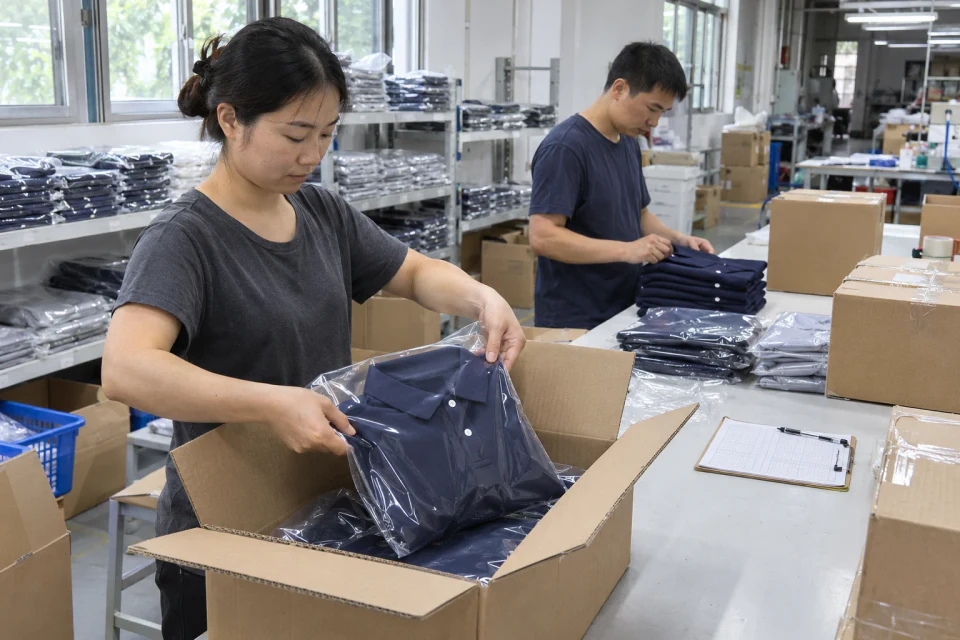
Connect retail presentation with production
Packaging requirements should be discussed with the garment rather than added after approval. Ask which fold method, individual protection, barcode data and carton allocation the receiving operation needs. Specify who supplies and checks label and barcode content. If products go to several receiving points, identify how quantities and documents will be separated before agreeing the packing plan.
Prepare a receiving-ready style file
For each selected style, identify the internal product reference, colour name, size range and proposed pack unit. Ask the receiving team which identifiers must appear on bags and cartons and whether different destinations need separate allocation. Bring the current requirement rather than an old supplier packing example. Discuss who will reconcile the final quantities and document any changes before the goods are released.
Leave the discussion with an action record
List the decisions made, outstanding information, sample objectives and the person responsible for each next step. Keep a versioned file for the garment references, measurements and artwork. A follow-up email should distinguish the points already accepted from choices still under review; no order quantity, production deadline or commercial result should be inferred from the meeting photograph.
Prepare with the clothing sourcing guide, compare MOQ and quotation requirements, or send your collection brief. If you would like to meet at an exhibition or visit the company, ask for the current arrangements rather than relying on an undated event assumption.