
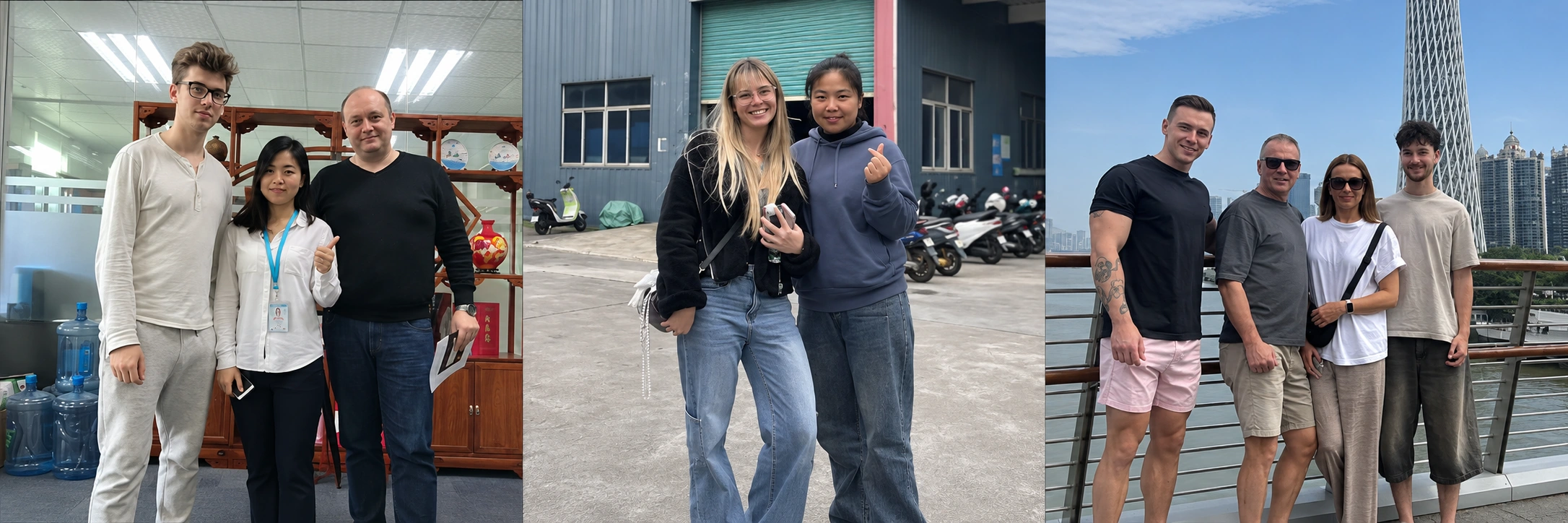
A business connection, followed by a clear brief
The customer exchange photograph records a business connection with Yumulin. The preparation points below are a practical sourcing guide, not a transcript of that meeting or evidence of an agreed purchase order. Contact the team to confirm the available meeting arrangement and the project scope you want to discuss.
Start with the intended wearing situation
An apparel development brief should describe how the garment will be used rather than making assumptions from a country name. Identify whether the collection is for studio exercise, everyday wear, outdoor activity or another specific setting. Explain desired coverage, movement and layering. Those choices give the development discussion a more useful starting point than a request for a generic summer fabric.
Evaluate fabric on the proposed garment
Compare composition, construction, weight and stretch with the fit direction. Opacity, recovery, surface feel and drying behaviour can matter differently for a fitted legging and a loose training top. Use swatches to narrow the selection, then assess the actual garment sample. If the range will carry UV, moisture-management or recycled-content claims, agree the applicable testing or evidence before adopting that wording.
Build a useful sample review
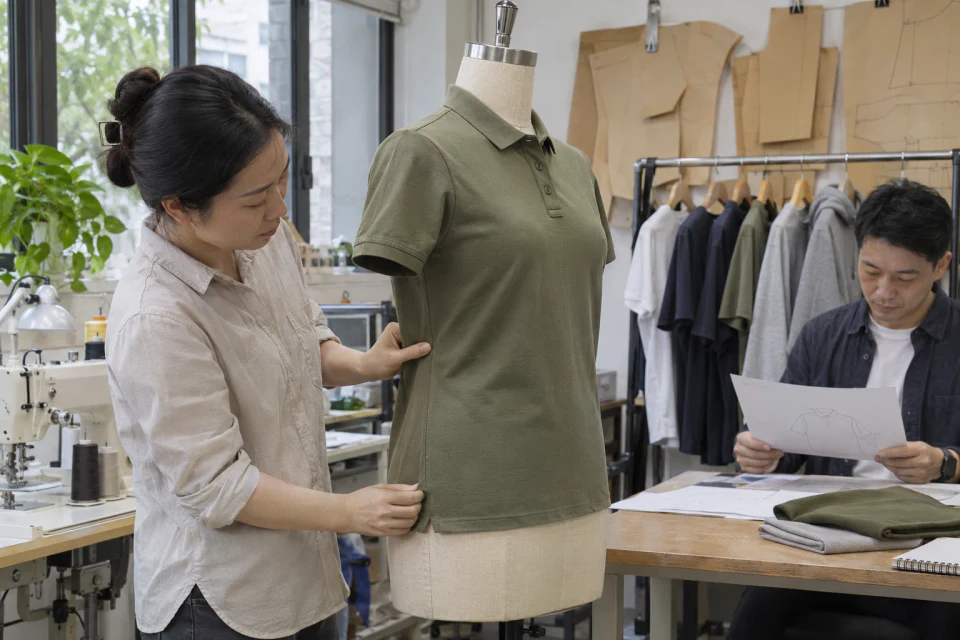
Define the base size, measurement points and the way the sample will be checked. Ask reviewers to separate fit, material and decoration comments, and combine them into one numbered revision. Record the selected colour and trim versions with the sample. Where other sizes need verification, discuss a size set rather than assuming that approving one size resolves the entire range.
Make care and fit review conditions explicit
Decide whether measurements will be compared before or after the agreed care cycle, and record how the sample will be conditioned and measured. Keep the fabric, garment and decoration versions together. Where several people review the collection, nominate one person to consolidate comments. This makes it easier to distinguish a deliberate fit change from a difference caused by measurement method or sample treatment.
Leave the discussion with an action record
List the decisions made, outstanding information, sample objectives and the person responsible for each next step. Keep a versioned file for the garment references, measurements and artwork. A follow-up email should distinguish the points already accepted from choices still under review; no order quantity, production deadline or commercial result should be inferred from the meeting photograph.
Prepare with the clothing sourcing guide, compare MOQ and quotation requirements, or send your collection brief. If you would like to meet at an exhibition or visit the company, ask for the current arrangements rather than relying on an undated event assumption.