
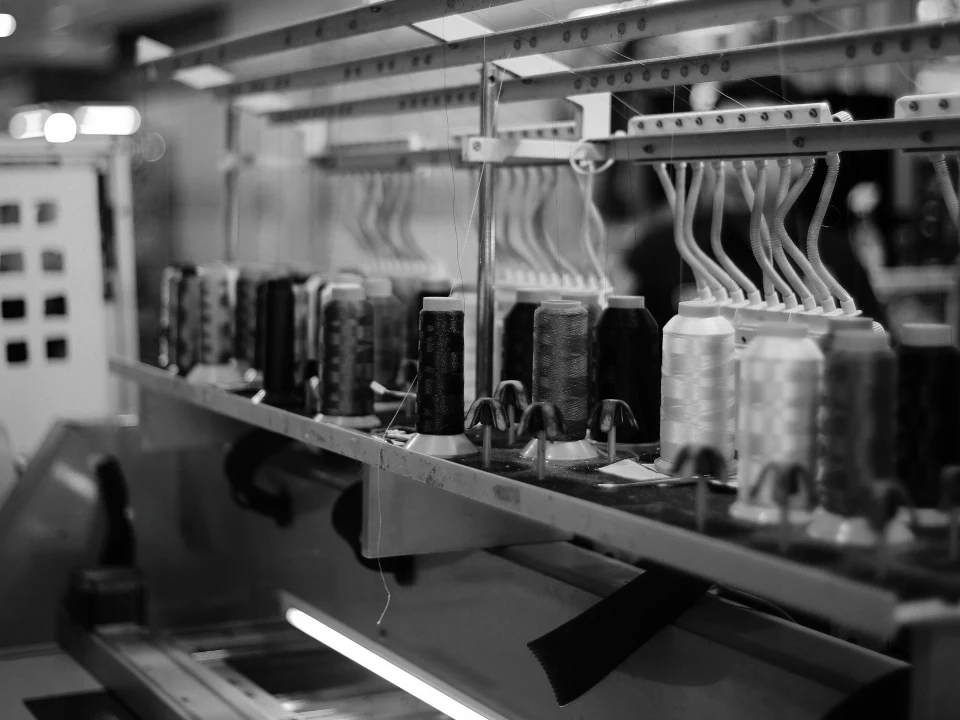
Embroidery creates a design with stitches rather than a printed ink layer. Flat embroidery, raised embroidery and chenille offer different textures and need different artwork decisions.
Compare the available routes
Fabric compatibility and sample checks
Review fabric weight and stretch, backing, stitch density and access to the placement. Compare small lettering, outline definition, puckering and the reverse side on an actual garment sample.
From specification to approval

- Define material, artwork or wash target.
- Develop the process on the intended fabric.
- Approve appearance, dimensions and agreed performance checks.
Questions buyers should settle
Can I choose the process from a photograph?
A photograph can show texture or placement, but cannot prove composition, durability or process settings. Keep an approved physical sample and the written specification.
Should decoration be checked before or after garment washing?
Agree the production sequence with the sample brief. If the garment will be washed after decoration, review the combined result; checking each step separately does not approve the finished garment.